

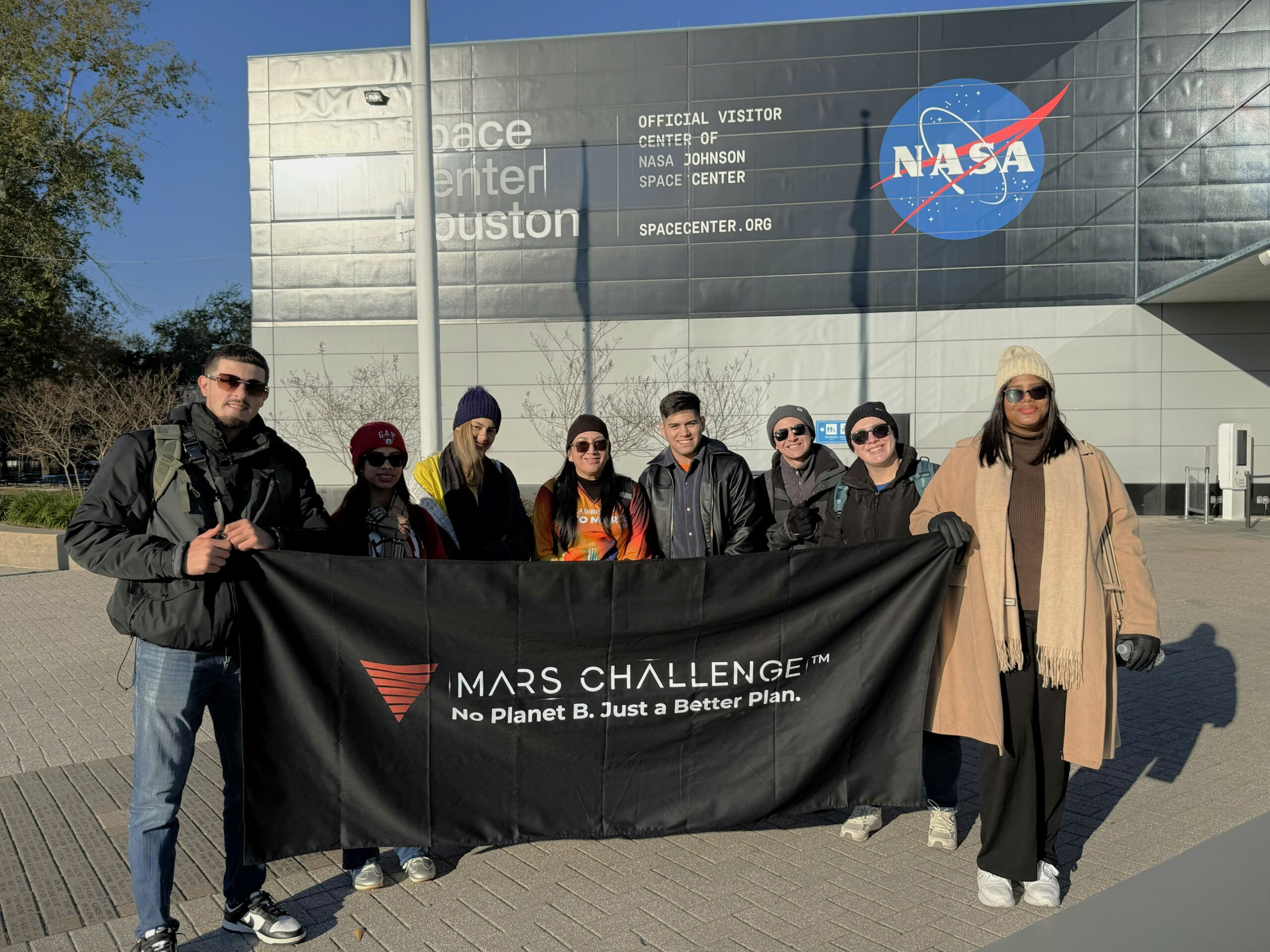

Teaching your students how to build sustainable systems for Earth and Mars feels overwhelming when both planets face serious constraints. Water shortages, limited energy, and the need for zero-waste solutions turn every lesson into a true survival challenge. The stakes are high—future generations must understand how to manage resources with precision and creativity.
This list gives you classroom strategies that connect real-world science with planetary exploration, so your students practice skills they’ll need as leaders and problem-solvers. You’ll find actionable ideas rooted in real research, from water mapping to ethical decision-making, that make abstract challenges become hands-on opportunities.
Get ready to discover practical models and project ideas that bridge Earth’s environmental lessons with Mars’s toughest obstacles. Each insight is designed to accelerate your students’ curiosity and prepare them for the challenges that matter most.
Table of Contents
- 1. Understanding Water Scarcity on Earth and Mars
- 2. Designing Sustainable Food Systems Across Planets
- 3. Solving Energy Generation for Dual Environments
- 4. Adapting Waste Management to Mars and Earth
- 5. Creating Resilient Cities in Extreme Conditions
- 6. Navigating Ethical Decision-Making in Space and Earth
Quick Summary
| Takeaway | Explanation |
|---|---|
| 1. Water Management is Critical for Survival | Understanding water scarcity on Earth and Mars shapes future survival strategies and innovative solutions. |
| 2. Sustainable Food Systems Must Minimize Waste | Designing closed-loop food systems for both planets encourages efficient resource use and reduced waste production. |
| 3. Energy Efficiency is Essential | Effective energy generation on Mars drives home the need for efficiency and reliability in resource use on Earth. |
| 4. Waste Management Requires Innovative Approaches | Adopting zero-waste principles from Mars design can lead to significant improvements in Earth’s sustainability practices. |
| 5. Ethical Decision-Making Affects Outcomes | Confronting ethical dilemmas related to resource access ensures responsible decision-making in both Earth and space contexts. |
1. Understanding Water Scarcity on Earth and Mars
Water is not equally distributed on our planet, and the same scarcity challenge waits on Mars. Understanding where water exists and how to access it forms the foundation for solving survival challenges on both worlds.
Earth faces a pressing water crisis. Over 2 billion people currently live in areas experiencing high water stress, and this number grows annually. The problem intensifies because much of Earth’s fresh water sits locked away in glaciers, ice caps, and deep underground aquifers that are expensive and difficult to access.
Mars presents an even starker reality. While scientists have detected water ice beneath the Martian surface and at the polar ice caps, accessing it requires advanced technology and significant energy investment. The water that does exist is often frozen solid or chemically bound to the soil, making extraction far more complex than drilling a well on Earth.
Why This Matters for Your Students
Your students will inherit a world where water management determines survival. The skills they develop studying Earth’s water scarcity directly apply to designing Mars habitats. Both scenarios demand the same critical thinking: How do you locate hidden water sources? How do you extract them efficiently? How do you prevent waste?
The connection between Earth and Mars becomes powerful when students realize that arid regions on Earth face conditions remarkably similar to Mars. Deserts, underground aquifers, and polar ice sheets teach us about resource limitation under real planetary constraints.
Key Water Scarcity Patterns to Explore
Students should understand these critical water availability patterns:
- Underground reserves: Groundwater potential zones require advanced mapping techniques using remote sensing and geophysical analysis to locate efficiently on Earth, and similar methods would be essential for Mars exploration.
- Frozen water: Arctic ice and polar regions contain vast quantities, but extraction demands extreme energy expenditure.
- Saline water: Oceans cover most of Earth, yet desalination remains energy-intensive and expensive.
- Atmospheric moisture: Both planets have trace water vapor that could theoretically be harvested, though the technology remains experimental.
The real challenge is not whether water exists—it’s whether we can access it under real planetary constraints.
Your classroom can bridge Earth and Mars by examining how communities in water-scarce regions on Earth (Middle East, North Africa, Australian Outback) develop survival strategies. These techniques translate directly to Mars habitat design.
Pro tip: Have students map their own region’s water sources using geospatial tools and calculate the energy required to extract groundwater, then apply those same calculations to a simulated Mars settlement scenario.
2. Designing Sustainable Food Systems Across Planets
Food production on Earth consumes massive quantities of water, land, and energy. On Mars, these resources barely exist. This creates a powerful classroom challenge: redesign agriculture from the ground up to work under extreme constraints.
Your students must grapple with a fundamental question: How do you grow enough calories in a closed system where nothing gets wasted and every input must be recycled? This is not theoretical. Mars habitats will demand exactly this approach.
Earth already offers proven models. In arid regions, farmers use drip irrigation systems that reduce water consumption by 60 percent compared to traditional spraying. In controlled environments like greenhouses and vertical farms, crops grow with 95 percent less water than field agriculture. These techniques represent survival strategies your students can study and adapt.
The Circular Economy Connection
Waste elimination forms the core of sustainable food systems design. Traditional agriculture treats waste as inevitable. Sustainable systems treat waste as failure.
Circular economy principles eliminate waste and pollution while regenerating resources. In a Mars habitat, every plant leaf, root, and stem becomes input for another process. Dead plant material feeds composting systems. Compost rebuilds soil. Soil grows the next crop. Nothing leaves the cycle.
Your classroom can model this by designing a closed-loop food system on paper. Students define inputs (water, nutrients, light) and trace where every output goes. On Mars, there is no “away.” Everything cycles back.
Practical Design Elements Students Should Explore
Help your students understand these key components:
- Crop selection: Which plants maximize nutrition per drop of water?
- Intercropping strategies: Combining plants like legumes and sorghum improves water and nutrient use efficiency, reducing total resource demands.
- Nutrient recycling: Human waste becomes fertilizer. Plant waste becomes soil amendment.
- Energy sources: Without fossil fuels on Mars, food production must run on solar power or nuclear energy.
- Space efficiency: Vertical growing stacks multiple crops in minimal footprint.
Designing food systems for Mars teaches us how to produce abundance from scarcity on Earth.
The beauty of this dual-planet perspective is that it makes Earth’s sustainability challenges urgent and solvable. Students see that the solutions they design for Mars survival directly improve farming in water-stressed regions on Earth right now.
Pro tip: Have students design a complete food system for a 12-person Mars colony using only the water and sunlight available in a sealed container, then calculate how their Earth-based agriculture knowledge would need to change to make it work.
3. Solving Energy Generation for Dual Environments
Energy is the difference between survival and catastrophe. On Earth, we have abundant options—fossil fuels, wind, hydroelectric, solar. On Mars, your options collapse to essentially two: solar power and nuclear reactors. This constraint forces your students to think critically about energy efficiency in ways Earth-based education rarely demands.
The dual-planet challenge reveals a hard truth: Earth’s energy waste becomes Mars’s death sentence. A single inefficient system can doom an entire habitat. This urgency makes the classroom suddenly real.
Why Energy Generation Differs Radically Between Worlds
Mars receives only 43 percent of the solar energy that Earth does due to its greater distance from the sun. Dust storms can black out the sky for weeks, making solar arrays useless. Winters are brutal. The Martian atmosphere cannot support wind turbines as Earth’s can.
Yet Mars has advantages Earth-bound energy systems lack. No weather patterns create unpredictable grid demands. A closed habitat system means energy consumption is completely predictable and controllable. Engineers can optimize ruthlessly.
On Earth, we waste energy at every step. Heating inefficient buildings. Powering idle machinery. Transmitting electricity across vast distances. Mars forces designers to eliminate all waste.
Energy Solutions Your Students Can Model
Help your class explore these realistic approaches:
- Solar power arrays: Optimized for Mars’s angle and lower solar intensity, deployable in protected locations away from dust.
- Nuclear reactors: Compact, reliable power sources that don’t depend on weather or time of day.
- Energy storage systems: Batteries or hydrogen fuel cells must carry the habitat through dust storms and long nights.
- Waste heat recovery: Every system on Mars must be designed to capture and reuse heat.
- CO2 conversion technologies that generate oxygen: Advanced plasma processes can transform Mars’s abundant atmospheric carbon dioxide into both oxygen for breathing and fuel for energy production.
Energy generation on Mars teaches us that efficiency on Earth is not optional—it’s survival preparation.
Students can calculate the energy requirements for a small habitat, then design power systems that provide 100 percent reliability. This exercise cuts through theoretical discussions about climate change and renewable energy. Suddenly, the mathematics becomes personal.
Comparing Earth and Mars Solutions
Examine how the same technologies serve different purposes:
- Solar panels on Earth: Supplement grid power, intermittent, weather-dependent.
- Solar panels on Mars: Primary power source, must be oversized to account for dust, designed with active dust removal.
- Nuclear on Earth: Large centralized plants, complex regulation, political challenges.
- Nuclear on Mars: Compact reactors, essential redundancy, no regulatory debate.
Your students will see that Mars is not a distant fantasy. It is a laboratory revealing how to build sustainable energy systems on Earth right now.
Pro tip: Have students design a complete energy system for a 12-person Mars colony that maintains power through a three-week dust storm using only available resources, then compare their solution to renewable energy strategies in your region.
4. Adapting Waste Management to Mars and Earth
On Earth, we throw things away. On Mars, there is nowhere to throw anything. This single fact transforms waste management from an afterthought into a survival necessity. Your students need to understand that zero-waste systems are not idealistic—they are practical requirements for Mars habitats.
This challenge reveals something profound: Earth should operate like Mars. We live on a finite planet just as surely as Mars settlers do. The only difference is that Earth’s consequences arrive more slowly.
Why Mars Forces a Waste Revolution
A Mars habitat cannot export garbage. Every kilogram of waste occupies precious storage space. Every discarded item represents resources that cannot be recovered. The math is brutal and unforgiving.
Consider this: a 12-person Mars colony generating 1 kilogram of waste per person daily produces 4,380 kilograms of waste annually. With limited launch capacity, every ounce matters. Nothing can be “away.” Every waste stream must become a resource stream.
Earth’s current system treats waste as a disposal problem. Mars demands treating waste as a design problem. The habitat itself must be engineered so waste never forms in the first place.
Technologies Your Students Should Explore
Real NASA research evaluates practical waste solutions for Mars missions:
- Trash compaction systems: Reduce volume to conserve storage space and transport mass.
- Trash-to-gas conversion: Transform organic waste into methane fuel through anaerobic digestion.
- AI-driven sorting technologies combined with plasma gasification: Advanced systems that categorize materials and convert them into useful products or fuel.
- Biotechnological processing: Microorganisms break down organic matter into water and carbon dioxide, which become resources for food and oxygen production.
- Water reclamation: All liquid waste gets processed and purified for reuse in agriculture and drinking systems.
On Mars, waste management is not environmental compliance—it is engineering excellence disguised as garbage science.
Practical Application for Your Classroom
Design a closed-loop waste system for your Mars colony model. Students must trace where every discarded item goes. Can it be composted? Recycled into building materials? Converted to fuel? If it cannot go anywhere, then it cannot be generated in the first place.
This forces students to redesign entire processes. Instead of using disposable containers, they engineer reusable systems. Instead of generating plastic packaging, they minimize it through clever design. The constraints breed innovation.
Dual-Planet Insight
Here is the uncomfortable truth your students must face: Earth’s waste crisis requires the same thinking as Mars. We have treated our planet as a dumping ground because we falsely believed in “away.” Mars teaches us that away does not exist. Everything cycles back. Always.
Pro tip: Have your students audit their school’s waste for one week, then redesign the waste streams as if the school were a sealed Mars habitat where nothing leaves the system—they will quickly discover that radical waste reduction is possible through design, not just recycling.
5. Creating Resilient Cities in Extreme Conditions
A Mars city will face temperatures dropping to minus 125 degrees Celsius. Dust storms will rage for weeks. Resources will be limited. Your students must design urban systems that not only survive these conditions but allow human communities to thrive. This is not fantasy. This is urgent preparation for how we must redesign Earth’s cities.
Climate change is making Earth’s conditions more extreme. Hurricanes intensify. Droughts expand. Heat waves break records. The cities we build today must survive conditions we have never experienced before. Mars becomes the ultimate design laboratory.
The Three Pillars of Urban Resilience
Resilience requires balancing three interconnected dimensions that must work together seamlessly:
- Environmental sustainability: Cities must produce their own water, food, and energy without depleting finite resources.
- Social cohesion: Communities must have trust, shared purpose, and systems that distribute resources fairly under stress.
- Economic viability: Cities must create opportunity and self-sufficiency, not dependence on constant external support.
On Mars, these three pillars are not optional extras. They are the foundation of survival. On Earth, we treat them as afterthoughts.
Building Cities That Expect Failure
Resilient cities anticipate problems before they arrive. A Mars habitat cannot call for emergency supplies. It must have redundancy built into every critical system.
Your students should design with these principles:
- Redundant systems: If one water processor fails, others maintain the colony. If solar arrays fail, nuclear backup engages.
- Self-healing infrastructure: Buildings repair themselves through smart materials or automated systems.
- Distributed resources: Critical facilities spread throughout the city rather than concentrating in one location.
- Adaptive design: Systems adjust to changing conditions rather than breaking under stress.
- Community preparedness: Citizens train continuously for emergencies and understand their role in survival.
A resilient city is not one that never faces crisis—it is one designed so that citizens navigate crisis without collapse.
Practical Design Challenge for Your Classroom
Have students design a city district for 5,000 people in extreme conditions. They must address:
- Housing that maintains comfortable temperature in minus 125 degree environments
- Food production that yields nutrition year-round without external inputs
- Water systems that capture, purify, and recycle every drop
- Energy networks that provide power during equipment failures
- Transportation systems that function in extreme weather
- Social structures that maintain community trust under perpetual stress
Students quickly discover that multidimensional sustainability frameworks addressing environmental, social, and economic factors are not theoretical. They are practical engineering requirements.
Why This Matters for Earth
European cities facing climate extremes can learn directly from Mars city design. Flood-resilient infrastructure. Heat-resistant materials. Community networks that function during infrastructure collapse. These are not future technologies. They are necessary now.
Your students will understand that designing for Mars is designing for Earth’s survival.
Pro tip: Challenge your students to redesign one neighborhood in your actual city using Mars resilience principles, then calculate how much more expensive true climate resilience would be compared to current construction standards.
6. Navigating Ethical Decision-Making in Space and Earth
On Mars, you cannot hide from consequences. Every decision affects survival. Every choice has weight. This is the reality your students must confront when designing solutions for dual-planet challenges. Ethics stops being abstract philosophy and becomes urgent practice.
Earth faces the same truth, but we have grown comfortable ignoring it. Climate decisions. Resource allocation. Technology deployment. These carry consequences that ripple across generations and continents. Mars forces us to decide with full awareness.
Why Space Ethics Matters Right Now
Space exploration is no longer the domain of government agencies alone. Private companies launch rockets. International teams collaborate. Non-governmental organizations plan missions. This expansion demands ethical guidelines reflecting global decision-making that protect human dignity, ensure fair access, and maintain integrity across borders.
Your students inherit a world where they will make these decisions. They need practice now.
The Five Core Ethical Questions
When facing any major decision on Mars or Earth, students should ask:
- Whose needs are we serving? Does the decision benefit only a few or strengthen the whole community?
- What are we risking? Could this decision harm people or environments that cannot defend themselves?
- Who decides? Are decisions made transparently by diverse voices, or concentrated in hidden power structures?
- What are the long-term consequences? Does this solution create new problems for future generations?
- What alternatives exist? Have we explored multiple pathways before committing to one?
These questions apply equally to Mars habitat design and Earth climate policy. They are not optional considerations. They are foundational.
Ethical Challenges Specific to Space and Earth
Your students should grapple with real dilemmas:
- Access and equity: If Mars colonization costs billions, who gets to go? How do we prevent recreating Earth’s inequality on another planet?
- Inclusion in decision-making: How do we ensure diverse voices shape space exploration policy, not just wealthy nations?
- Human subject research: Testing technologies on Mars colonists raises ethical concerns about consent and risk that demand careful governance.
- Environmental protection: Do we have obligations to preserve Mars’s pristine environment, or does survival override that concern?
- Resource extraction: If we mine Mars, who owns those resources? What prevents exploitation?
Ethical decision-making is not a constraint on innovation—it is what makes innovation worth pursuing.
Bringing This to Your Classroom
Present your students with a real ethical dilemma from your Mars project. A water source exists, but accessing it requires drilling near a region scientists hope to study for signs of ancient microbial life. Do you sacrifice science for survival? How do you decide?
There is no clean answer. That is exactly the point. Students must practice making difficult choices, explaining their reasoning, and accepting responsibility for consequences.
They must learn that human agency under real constraints is the essence of decision-making. Not avoiding hard choices. Making them thoughtfully.
Pro tip: Have your students debate a contentious space ethics scenario as a classroom exercise, then reverse positions and argue the opposite side—this builds empathy for competing values and teaches that ethical maturity means understanding why intelligent people reach different conclusions.
Below is a comprehensive table summarizing key aspects of water scarcity and sustainability strategies as discussed in the article.
| Topic | Details | Implications |
|---|---|---|
| Water Scarcity on Earth | Fresh water sources are unevenly distributed, with many inaccessible reserves such as glaciers and underground aquifers. | Rising stress on water availability demands innovative solutions for resource management. |
| Water Scarcity on Mars | Water manifests primarily as ice or chemically bound molecules, requiring advanced extraction methods. | Ensures survival by developing technologies capable of utilizing concealed sources efficiently. |
| Sustainable Food Systems | Techniques such as drip irrigation and vertical farming reduce water and energy requirements. | Models applicable to Earth challenges and Mars colonization efforts. |
| Energy Demand on Mars | Limited options such as solar power and nuclear reactors prioritize efficiency and reliability. | Encourages innovative energy solutions which can influence Earth practices. |
| Waste Management | On Mars, waste must be repurposed and managed within closed habitats. | Highlights importance of adopting zero-waste principles globally. |
| Resilient City Design | Cities must address environmental, social, and economic resilience to survive extreme conditions. | Applies to climate adaptation strategies enhancing sustainability worldwide. |
Empower Your Students to Tackle Dual-Planet Challenges Today
Water scarcity, sustainable food systems, resilient energy, zero-waste management, and ethical decision-making are not distant theories but urgent realities shaping both Earth and Mars. The article “6 Practical Examples of Dual-Planet Challenges for Classrooms” highlights the critical need for young innovators to develop practical solutions that bridge survival on two worlds. If you want your students to master these vital skills while engaging in real-world, impactful projects, Mars Challenge is your ideal partner.
Join a global movement where your students learn to prototype survival systems that matter — navigating complexity with ethic intelligence and collective innovation. By participating in Mars Challenge, students experience hands-on challenges reflecting themes like water resource management and circular economies inspired by Mars habitats. It is a chance to design resilient cities, rethink energy generation, and embrace ethical choices that prepare them to solve Earth’s and Mars’s greatest survival puzzles. Start your journey now at Mars Challenge and empower the next generation of dual-planet problem solvers.
Frequently Asked Questions
How can I implement dual-planet challenges in my classroom?
To implement dual-planet challenges, start by aligning curriculum topics with the themes of Earth and Mars survival. Create project-based assignments where students analyze real-world issues and apply them to hypothetical situations on Mars. For example, task them with designing a sustainable water system that could function in both environments.
What are some specific activities to engage students in these challenges?
You can engage students through hands-on activities like mapping local water sources or designing a closed-loop food system for a Mars colony. Encourage them to calculate the resources needed and explore how to minimize waste. Set specific objectives, such as reducing water use by 30% compared to conventional methods.
How do I address the ethical implications of dual-planet challenges with my students?
Discussing ethical implications is crucial; prompt students to debate decisions that impact both ecosystems. Introduce scenarios where they must choose between immediate needs and long-term sustainability on both planets. Have them document their thought processes and conclusions, reinforcing accountability in decision-making.
What interdisciplinary approaches can I take to teach these concepts?
Take an interdisciplinary approach by combining science, technology, engineering, and mathematics (STEM) with environmental studies and ethics. Foster collaboration on projects that require students to apply diverse skill sets—for instance, using mathematics to calculate energy requirements while studying how different energy sources impact environments. Aim for students to integrate insights from multiple disciplines in their solutions.
How can I measure the success of these challenges in my classroom?
To measure success, establish clear metrics such as student engagement, understanding of concepts, and innovation in problem-solving. Use rubrics that assess creativity, practicality, and thoroughness in project outcomes. Conduct surveys or reflections after each project to gather feedback, aiming for at least an 80% satisfaction rate among students.
How do dual-planet challenges prepare students for real-world problems?
Dual-planet challenges prepare students by fostering critical thinking and problem-solving skills applicable to real-world issues, such as climate change and resource management. Encourage them to draw parallels between their projects and contemporary challenges faced on Earth. Set goals for them to articulate how their solutions could apply to immediate problems they see in their communities.